
I Crawled Into a Cave I Wasn’t Sure I’d Come Back Out Of — And Now I’m Obsessed
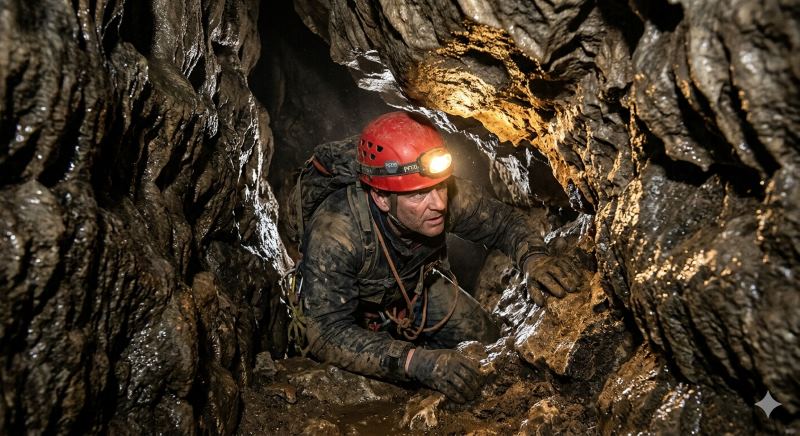
The first time I squeezed through a crack in a hillside in Eastern Kentucky, I genuinely thought I’d made a terrible mistake.
My headlamp was flickering. My knees were soaked. The passage had narrowed to maybe 18 inches wide, and somewhere behind me, water was dripping with this eerie, echoing rhythm that made it impossible to tell how far underground I actually was.
And yet — 40 minutes later, when I crawled out into a chamber the size of a small cathedral, with stalactites hanging down like frozen chandeliers and a pool of crystal-clear water sitting perfectly still at my feet — I understood why people get hooked on cave exploration.
That was three years ago. Since then I’ve explored caves in Tennessee, New Mexico, Slovenia, and a few I probably shouldn’t publish the coordinates for. Here’s what I’ve learned, where you should start, and — more importantly — what not to do.
Why Hidden Caves Are Different From Tourist Caves
There’s nothing wrong with Mammoth Cave or Carlsbad Caverns. They’re stunning, they’re accessible, and they do conservation work that actually matters. I’ve done both.
But they’re also paved, lit with colored LEDs, and walked by 500,000 people a year.
“Hidden caves” — the kind we’re talking about here — are something else entirely. These are wild caves, undeveloped caves, caves where the only light is what you bring and the only path is what you figure out. Some have names you’ll find on trail maps. Others you’ll only hear about from locals or from someone in a caving club who decides you seem trustworthy enough.
The difference matters because the experience is incomparable. And so is the risk.
Where to Actually Find Hidden Caves (That Are Safe and Legal to Enter)
Let’s start here, because this is where most people get stuck.
1. Grottos — Your Best First Resource
The National Speleological Society (NSS) has regional chapters called “grottos” scattered across the US. Joining a local grotto is, without question, the fastest way into cave exploration. These are the people who know which caves in your region are open to the public, which ones require permits, and which ones will get you arrested or killed. They also lead beginner trips regularly.
Go to the NSS website (caves.org), find your nearest grotto, and show up to a meeting. Bring enthusiasm and zero ego.
2. BLM and National Forest Land
A huge number of wild caves sit on Bureau of Land Management (BLM) or National Forest land. Many of these are open to the public without permits (though some require them for sensitive areas). The BLM’s recreation portal and individual National Forest websites often list known cave locations.
Some specific areas worth researching: the Ozarks in Missouri and Arkansas, the karst regions of central Florida, the lava tube systems in Idaho (Craters of the Moon is astonishing), and the cave-dense counties in central Tennessee.
3. State Parks With Wild Cave Programs
Indiana’s Wyandotte Caves, Carter Caves in Kentucky, and Toca da Boa Vista in Brazil (for those who like to travel far for their adventures) all offer wild cave programs where rangers take small groups off the standard path. It’s guided, but it’s also genuinely exploratory. Great starting point.
4. AllTrails and iNaturalist
Not the most obvious tool, but people geotag cave entrances on both platforms. AllTrails has listings for hikes that lead to cave systems. iNaturalist has observation posts from cavers and naturalists. Cross-reference these with satellite imagery on Google Earth and you’ll sometimes spot entrances yourself.
5. Talk to Locals
I’m serious. The best cave I’ve ever been in — a multi-chamber system in rural Tennessee with a waterfall inside — I found because I was buying gas and mentioned to the guy at the counter that I was looking for caves. He drew me a map on a receipt.
Local knowledge is irreplaceable. Farmers, hunters, forestry workers — these people often know cave locations that have never been written down anywhere.
Caves Worth Knowing About (Across the World)
Here are some hidden or lesser-known caves that reward the effort to reach them:
Son Doong, Vietnam — The largest cave in the world by volume. Actual jungles grow inside it. You need a guide and a permit, but it’s not off-limits. Green Caves runs tours and they’re reputable.
Cave of the Crystals, Mexico (Cueva de los Cristales) — Currently closed to the public because the crystals were damaged by human breath. But worth knowing it exists. The selenite crystals inside are 11 meters long. Eleven meters.
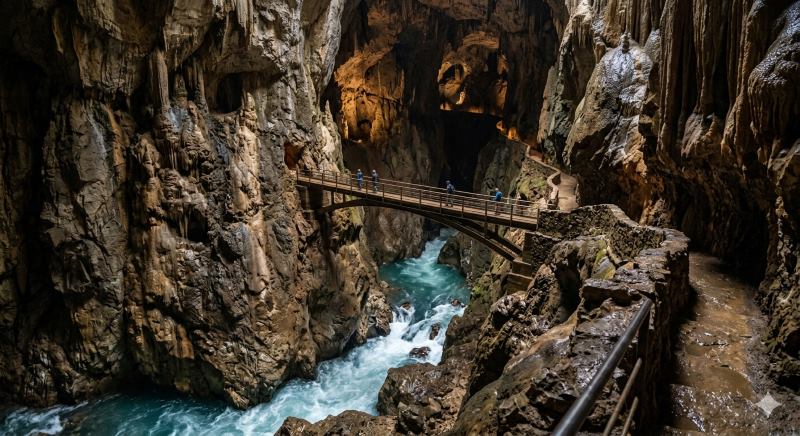
Skocjan Caves, Slovenia — This one’s technically developed, but the scale of the underground canyon is so extreme it still feels like another planet. The waterfall inside is taller than Niagara. Most Americans have never heard of it.
Wind Cave, South Dakota — One of the longest and most complex cave systems in the world, and it sits inside a national park most people visit for the buffalo. The cave itself gets far less attention than it deserves. Wild cave tours are available.
Hang En, Vietnam — Less famous than Son Doong but still one of the top three largest caves on earth, and you camp inside it. Oxalis Adventure runs this one too.
Lava River Cave, Oregon — A lava tube you can walk into without a guide. It’s on national forest land, it’s free, and you need a headlamp and a jacket. Genuinely a great first cave for beginners.
Blue Spring Cave, Tennessee — One of the longest caves in the US. Located on private land, but access is available through organized trips. The river that runs through it is something I still think about.
What You Actually Need to Bring
First time I went into a wild cave, I brought one flashlight. My friend, who had done this before, looked at me like I’d shown up to scuba dive with a snorkel.
Three light sources minimum. Always three. Not because two will definitely fail — but because caves eat batteries, caves eat switches, and caves are the one environment where “I’ll be fine” never works out the way you hoped.
Here’s a basic gear list that I’ve refined through embarrassing mistakes:
- Helmet with mounted headlamp — not a handheld flashlight, a mounted one, so your hands stay free. Black Diamond Spot is solid. Petzl Tikka for a budget option.
- Two backup lights — at least one of them on your body rather than your bag
- Knee pads — you’ll thank yourself immediately
- Gloves — cave surfaces are rough and often sharp
- Layering — caves stay at a constant temperature (usually 50-60°F in North America), so if you’re going in summer, the thermal shock is real
- Wet suit or dry bag — for any cave with water
- Whistle — in case you need to signal
- Snacks and water — dehydration underground sneaks up on you
- Trash bag — you pack out everything you bring in. Everything.
Apps like Gaia GPS are useful for marking trailheads and entrances before you go in (cell signal doesn’t exist underground, obviously). PeakVisor can help with terrain reading on the surface.
Mistakes I Made So You Don’t Have To
Going alone my second trip. I wanted to explore a cave I’d visited with a group, and I figured I knew the layout. I got turned around for 45 minutes in a section that felt completely different without people to reference. Solo caving is a legitimate thing experienced people do, with specific training, protocols, and gear. I had none of those. Don’t do what I did.
Underestimating the cold. A 4-hour cave trip at 54°F when you’re wet and not moving fast is its own kind of suffering. I now always bring an extra layer in a dry bag. Non-negotiable.
Touching formations. The oils from your skin damage cave formations — stalactites, stalagmites, cave pearls — permanently. I touched things in my first few trips thinking it was fine because “I barely touched it.” I know better now. Look, don’t touch.
Not checking for flooding conditions. This one’s serious. Some caves flood rapidly when it rains. Slot canyons kill people for the same reason. Always check the forecast before entering any cave with a stream or with passages that show signs of water flow. If it’s raining, or rain is expected nearby, stay out.
Not telling anyone where I was going. Standard wilderness protocol, and caving is no different. Leave a detailed note — which cave, which trailhead, what time you expect to be out, who to call if you’re not back by a certain time.
On White-Nose Syndrome and Protecting Cave Ecosystems
This matters. A lot.
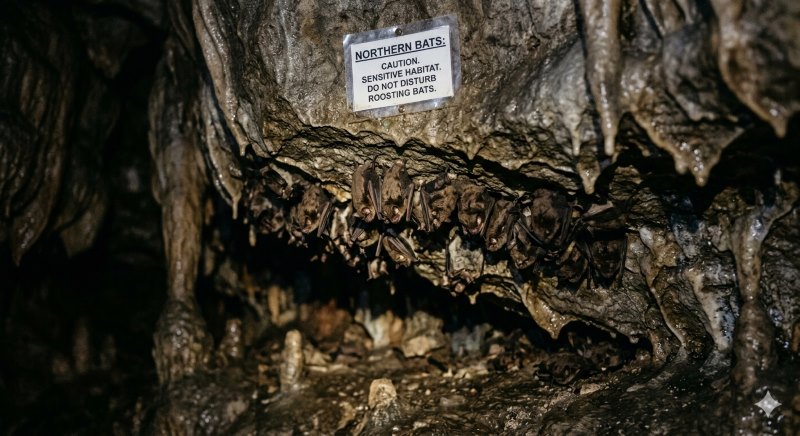
White-nose syndrome is a fungal disease that has killed millions of bats across North America since 2006. The fungus spreads partly through contaminated gear — boots, ropes, clothing moved from one cave to another.
The protocol is straightforward: decontaminate your gear between caves. There are specific decontamination methods on the US Fish and Wildlife Service website. Some caves are outright closed during bat maternity season (typically May to August). Respect those closures.
Caves also host some of the most unusual ecosystems on earth — blind fish, cave crickets, endemic species found nowhere else. “Leave No Trace” means more underground than almost anywhere else because cave ecosystems recover incredibly slowly.
How to Actually Start This Weekend
If you’re in the US and want to try this for the first time, here’s the shortest path:
- Google your state + “NSS Grotto” and find the nearest chapter
- Email them, mention you’re a beginner, ask if they have upcoming beginner trips
- If you want to go independently first, look up Lava River Cave in Oregon, Jewel Cave in South Dakota, or Cathedral Caverns in Alabama — all allow self-guided or minimally guided access and won’t put you in over your head
- Get a helmet, a headlamp with a spare, and a backup flashlight before you go anywhere
- Read the NSS’s Introduction to Caving guide (it’s free on their website)
There’s something about being underground — genuinely underground, in the dark, in a space that existed for millions of years before anyone knew it was there — that I genuinely can’t replicate anywhere else. The silence is different. The scale messes with your perception. Time stops making sense.
I’ve stood in chambers where no light has existed for geological ages, and switched off my headlamp just to feel the complete, total darkness for a few seconds.
It’s one of the stranger experiences available to a human being. And most of it is accessible to anyone willing to research, prepare, and go.
Start small. Go with people who know what they’re doing. Don’t touch the formations. And bring more lights than you think you need.
Have a cave you love or a beginner experience to share? Drop it in the comments — I read every one and I’m always looking for the next place to crawl into.