
The Best Road Trips in the USA (From Someone Who’s Actually Done Them)
I still remember the moment I decided I was done with airports for a while.
It was a Tuesday afternoon. I’d just spent 40 minutes in a security line, had my shampoo confiscated (again), and landed at my destination only to wait another hour for a rental car that didn’t look remotely like what I’d booked. I sat in the parking lot of some chain hotel, exhausted, and thought — why am I doing this to myself?
A few weeks later, I packed a cooler, downloaded Spotify playlists I’d been meaning to make for two years, and drove from Nashville to New Orleans with no real deadline and no return ticket to worry about. That trip changed the way I travel.
Road trips aren’t just a cheaper way to get somewhere. Done right, they’re the whole point.
So if you’re thinking about hitting the road — whether it’s a weekend escape or a multi-week adventure — here are the best routes I’ve done (or driven parts of), plus the stuff I wish someone had told me before I went.
1. Pacific Coast Highway (California) — The Classic That Earns Its Reputation
Everyone recommends this one, and everyone is right.
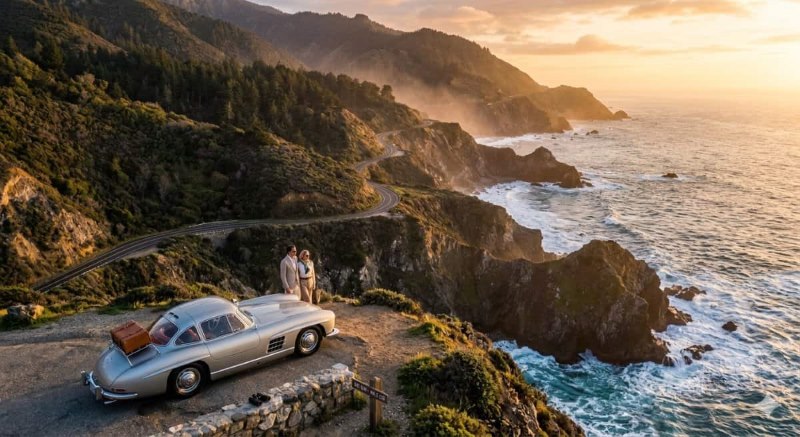
PCH runs along California’s coastline from San Diego all the way up to the Oregon border, but the truly jaw-dropping stretch is between Los Angeles and San Francisco — about 400 miles. Most people do it in 2–3 days, but I’d recommend 4 or 5 if you can swing it.
The section between Carmel and Morro Bay (through Big Sur) is where most people lose their minds a little. The cliffs drop straight into the Pacific, there are no guardrails in some places, and you’ll pull over every 10 minutes just because you have to.
What I didn’t expect: How cold it gets, even in summer. I drove this in July and had to buy a fleece in Monterey because I packed like I was going to the beach. Pack layers.
Don’t miss: Bixby Creek Bridge for photos, McWay Falls in Julia Pfeiffer Burns State Park (a short 10-minute walk), and stopping in Cambria for a night — it’s a small, underrated town that doesn’t feel touristy.
Best app for this route: Google Maps works fine, but I used Roadtrippers (roadtrippers.com) to find hidden stops and campgrounds along the way. It’s genuinely useful and not just a list of chain restaurants.
2. Route 66 — Slower Than You Think, Better Than You Expect
I’ll be honest — I was skeptical of Route 66. It felt like a nostalgia trip designed for people who like tchotchke shops. I was kind of wrong.
The original “Main Street of America” runs from Chicago to Santa Monica, covering about 2,400 miles across 8 states. You won’t drive all of it in one go — most stretches are now bypassed by interstates — but the surviving segments are genuinely strange and wonderful.
The stretch through New Mexico and Arizona is where it clicked for me. The Painted Desert, the Petrified Forest, the town of Winslow (yes, like the Eagles song) — it all has this eerie, beautiful stillness that you just can’t get at 75 mph on I-40.
My honest mistake: I skipped too much of Oklahoma trying to get to the “good parts.” Don’t do this. Route 66 in Oklahoma has some of the most authentic, untouched sections of the original road — old motels, diners that haven’t changed since 1962, towns where people are genuinely happy to talk to you about the history. Slow down there.
Budget reality: This trip can be done cheap. I averaged under $80/night by mixing budget motels (some of the retro ones along the route are actually pretty great) with one or two splurges at places with history, like La Posada in Winslow, Arizona.
3. The Blue Ridge Parkway — For When You Need to Actually Decompress
If I’m being real, the Pacific Coast Highway is beautiful, but it’s also a little stressful. The Blue Ridge Parkway is the opposite of stressful.
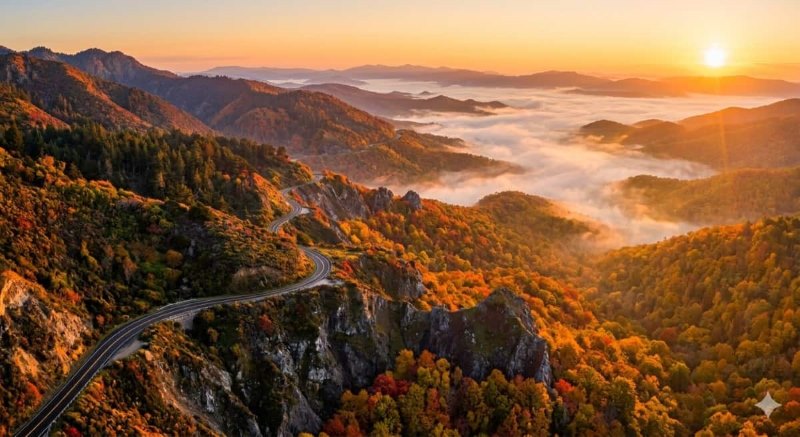
Running 469 miles through Virginia and North Carolina along the Appalachian Mountains, the Parkway is one of the most visited national park sites in the country — but it rarely feels crowded. There are no commercial trucks allowed, the speed limit is 45 mph the whole way, and there are hiking trails, overlooks, and picnic spots roughly every few miles.
I did this in October, which was a mistake in the sense that it was so beautiful I cried a little. The fall foliage is ridiculous. Book accommodation months in advance if you’re going in October because nothing will be available otherwise — I learned this the hard way and ended up driving 40 minutes off the parkway to find a room.
The underrated gem: Asheville, North Carolina sits right along the route and deserves at least two full days. Great food scene, good live music, and easy access to more hiking. It’s become more touristy lately, but it still delivers.
Practical note: Gas stations and cell service are sparse on the Parkway itself. Fill your tank at every reasonable opportunity and download offline maps before you go. I use Maps.me for offline navigation — it’s free and reliable.
4. The Florida Keys — Driving on the Ocean (Kind Of)
This one’s short — about 130 miles from Miami to Key West — but it’s genuinely unlike any other drive in the country.
The Overseas Highway basically hops from island to island using 42 bridges, including the famous Seven Mile Bridge. You’re surrounded by water on both sides for stretches of it, and the color of the water in the Keys is this absurd turquoise that doesn’t look real.
I’ve done this drive twice — once in a rush and once slow, stopping at Bahia Honda State Park, grabbing food at random seafood shacks, and actually spending time in Islamorada before the Key West tourist circus. The slow version is ten times better.
What people get wrong: They drive straight to Key West, spend one night, and leave. Key West is fun but it’s also kind of a party town with a lot of cruise ship crowds. The best stuff — snorkeling, kayaking through mangroves, watching the sunset from a beach that isn’t packed — happens in the Middle Keys.
Best time to go: November through April. Anything from June through September is hurricane season and it’s brutally humid.
5. Going-to-the-Sun Road, Montana — The Most Dramatic 50 Miles in America
This one’s not a road trip in the traditional multi-day sense — it’s a 50-mile drive through Glacier National Park that takes about two hours without stops (and about six hours if you’re doing it right).
I almost didn’t include this because it’s so short, but it belongs here because nothing I’ve driven has matched it for sheer drama. The road climbs to 6,646 feet at Logan Pass, winds along cliffs with nothing below you for what feels like forever, and passes through landscapes that look like they were designed by someone who really wanted to overdo it.
The catch: The road is only fully open from roughly late June through mid-October, depending on snowpack. In 2023, some sections didn’t open until July 4th. Always check the Glacier National Park website (nps.gov/glac) before you plan this leg.
Big warning about parking: The park now requires timed entry permits and advance vehicle reservations for going-to-the-sun road parking lots during peak season. This changed a few years ago and a lot of people show up unprepared. Book well in advance at recreation.gov.
Common Road Trip Mistakes (I’ve Made Most of These)
Overplanning the itinerary. I once mapped out every hour of a 10-day trip and spent the whole time anxious about being behind schedule. Leave blank time. The best things that happened on any of my trips were unplanned.
Skipping the secondary roads. The interstate gets you there faster, but “there” isn’t always the point. Highway 1, US-89, US-191 — these roads exist and they’re extraordinary.
Not checking road closures. Especially for mountain routes. I drove three hours toward Going-to-the-Sun Road once only to find a section closed for maintenance. Five minutes on the park website would have saved me that.
Packing too much. You’re in a car, not a plane — I know — but stuff still piles up and a cluttered car is a stressful car. Pack lighter than you think you need to.
Ignoring the weather. Mountain roads, coastal highways, desert stretches — they all have their own weather personalities. Check a week out and stay flexible.
The Gear That Actually Matters
You don’t need a lot of special equipment, but a few things have genuinely made my trips better:
- A good portable cooler (I use a YETI Roadie) — makes snacks and drinks way cheaper than gas station stops
- A car phone mount — sounds obvious but don’t try to navigate while holding your phone
- An offline map app — Maps.me or downloaded Google Maps sections for areas with bad cell service
- Roadtrippers Plus — worth the subscription for finding interesting stops you’d never search for yourself
- A physical road atlas — old school, but I’ve been saved by mine more than once
Where to Start If You’ve Never Done This Before
If you’re a first-timer and don’t know which route to try, I’d say start with the Blue Ridge Parkway. It’s manageable in a long weekend, it’s not overwhelming in terms of logistics, and it’s beautiful enough that you’ll immediately want to plan the next one.
The PCH is more of a commitment — traffic around LA and San Francisco can be a pain, and the Big Sur section requires some navigation care. But it’s worth working toward.
Route 66 is a lifestyle choice. Block out at least two weeks, make peace with slow, and you’ll love it.
The road doesn’t care about your calendar. It’s patient. It’ll be there whenever you’re ready to go.
Have a route that deserves to be on this list? Drop it in the comments — I’m always building out the next trip.
Last Updated 2026: