
I Planned a $600 Road Trip Across America —Cheapest Vacation Spots in the USA
Last summer, my partner and I had exactly $600 left after paying rent, a car payment, and an unexpected vet bill. We still desperately needed a vacation — you know that feeling where your brain is just done and a change of scenery isn’t a luxury anymore, it’s basically survival?
So we did what any broke-but-determined couple does: we opened Google Maps, pulled up the GasBuddy app, and started plotting. What followed was honestly one of the best trips we’ve ever taken. Not despite the budget — because of it. Cheap destinations forced us to actually explore instead of just checking into an overpriced hotel and calling it a vacation.
Here’s everything we learned, all the spots we discovered, and the mistakes we made so you don’t have to repeat them.
Why “Cheap” Doesn’t Mean “Boring”
Before I get into the actual destinations, let me kill a myth: budget travel in the USA does not mean settling. The country has an embarrassing amount of natural beauty, quirky small towns, and genuinely jaw-dropping landscapes that cost close to nothing to visit. The expensive part of most American vacations is usually the accommodation and the restaurants — both of which are completely avoidable if you know what you’re doing.
Apps I used constantly throughout this process: Hipcamp and Campsite for finding cheap or free campsites, GasBuddy for fuel, Roadtrippers to plan actual routes, and Yelp filtered to under $$ for food. More on those later.
The Cheapest Vacation Spots in the USA (That Are Actually Worth Going To)
1. The Smoky Mountains, Tennessee
This one surprised me because I figured anything popular would be expensive. But Great Smoky Mountains National Park is the most visited national park in the country and it has no entrance fee. Zero. None. You just… drive in.
We camped at Elkmont Campground for about $25 a night, which for two people works out to $12.50 each. The hiking is incredible — Alum Cave Trail alone is worth the entire trip — and the little towns like Gatlinburg and Pigeon Forge nearby have genuinely good, cheap eats if you skip the tourist traps and walk a block off the main strip.
What I’d do differently: We made the mistake of showing up to Clingmans Dome at noon on a Saturday in July. It was packed. Go at sunrise or sunset. Completely different experience.
2. Moab, Utah (Camping Season Only)
Okay, hear me out. Moab sounds expensive, and it can be if you’re booking a hotel in peak season. But if you go in April or October and you’re willing to camp, you can experience Arches National Park and Canyonlands for the price of a $35 weekly pass — and the BLM (Bureau of Land Management) land around Moab has tons of free dispersed camping.
We found a free spot about 7 miles outside of town using the FreeRoam app on our phones, set up our tent with a view of red rock formations that looked like a screensaver, and paid literally $0 for three nights of accommodation.
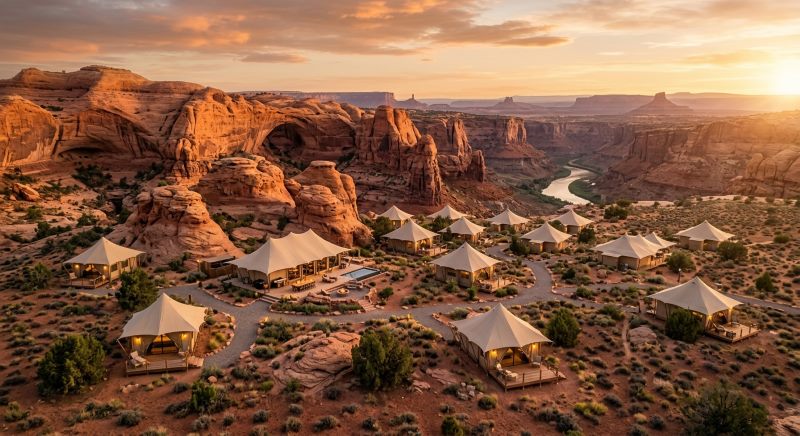
The mistake most people make is going in the summer. In June and July, it’s 105°F, and the parks are mobbed. Spring and fall are cooler, quieter, and the light on those red rocks is something else entirely.
3. Savannah, Georgia
If camping isn’t your thing and you want an actual city experience, Savannah is one of the most underrated cheap city breaks in the country. Hotels there are reasonable compared to places like Charleston or Nashville, and the entire historic district is basically a free walking tour.
Forsyth Park is stunning and free. The squares throughout the city — there are 22 of them — each have their own character and history, and just wandering between them for a few hours costs you nothing. The River Street area has some tourist pricing, but head a few blocks inland, and you’ll find local spots where a full plate of shrimp and grits runs you under $15.
We stayed at a small Airbnb on the edge of the historic district for $68 a night, and honestly, it was nicer than hotels twice the price.
4. South Padre Island, Texas
Beach vacations in the USA usually destroy a budget fast. South Padre Island is the exception. It’s a barrier island at the southern tip of Texas, and while it gets rowdy during spring break, outside of that window, it’s genuinely relaxed, affordable, and the beach is gorgeous.
We went in late October. The water was still warm enough to swim, the crowds were gone, and we found a beachfront motel for $79 a night. That might sound like a lot, but for a beachfront room? It’s a steal. You can also camp on Padre Island National Seashore (a different, wilder stretch of island further north) for around $8 a night.
The biggest money trap here: restaurants right on the beach. Walk two streets back, and prices drop by about 40%.
5. Asheville, North Carolina
Asheville has a reputation as a trendy arts town, which usually translates to expensive. But it’s surrounded by the Blue Ridge Parkway — one of the most scenic drives in America — which is completely free. No toll, no entrance fee, just 469 miles of mountain views, overlooks, and wildflower meadows.
We used Asheville as a home base and drove sections of the Parkway each day. The town itself has a great farmers’ market on Saturdays, where you can eat well for under $10, and the River Arts District is free to wander through and genuinely interesting.
The mistake I made: I booked accommodation in downtown Asheville on a weekend in October (peak leaf season). Prices were double what they’d have been on a Tuesday. If you’re flexible with timing, go mid-week.
6. Albuquerque, New Mexico
New Mexico is chronically overlooked as a travel destination, and I genuinely don’t understand why. Albuquerque has Old Town, the Sandia Mountains right on the city’s doorstep, and some of the best green chile food you’ll ever eat — all at prices that feel like a decade ago.
The Petroglyph National Monument just outside the city is free. The Sandia Peak Tramway is one of the longest aerial trams in the world and costs around $15. A bowl of posole at a local spot in Old Town might run you $9.
If you time it right, the Albuquerque International Balloon Fiesta in October is one of the most spectacular free spectacles in the country (the event itself has a small entry fee, but you can see hundreds of hot air balloons floating over the city just by being in the right spot for free).
7. The Florida Keys on a Budget
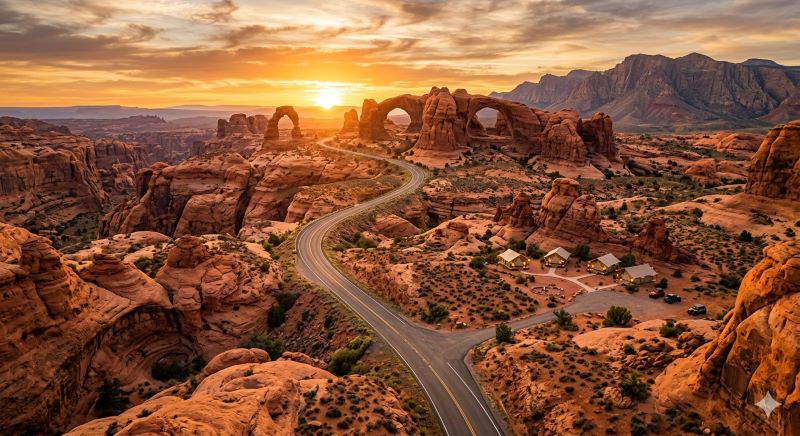
The Keys have a reputation for being wildly expensive, and some of it is deserved. Key West hotels are brutal. But here’s what most people don’t know: you can drive the Overseas Highway — one of the most unique road trips in the world, crossing 42 bridges over open ocean — and experience most of what makes the Keys special without paying resort prices.
We stayed in Marathon, which is roughly the midpoint of the Keys. Accommodation there runs significantly cheaper than Key West. Bahia Honda State Park has one of the best beaches in Florida, and camping for around $36 a night. Snorkeling gear rentals from local shops run about $15.
How to Keep Costs Low Anywhere You Go
A few things that made a massive difference on our trip:
Cook some of your own meals. We brought a small camping stove and a cooler. Breakfast and lunch from a grocery store, dinner out once a day. That alone cut our food budget roughly in half.
Use the America the Beautiful Pass. If you’re visiting multiple national parks, this $80 annual pass pays for itself almost immediately. Two people at Arches alone would’ve paid $35 without it.
Travel shoulder season. Anywhere between May and early June, or September through October, you’ll find lower accommodation prices and smaller crowds. The weather in most of these destinations is actually better than peak summer anyway.
Be flexible with check-in days. Hotels and short-term rentals often price weekends much higher than weekdays. If you can arrive Tuesday and leave Thursday, you’ll notice a real difference.
Download maps offline. We used Google Maps’ offline feature before heading into areas with poor cell service. Sounds basic, but we watched another couple drive 45 minutes in the wrong direction in Utah because they were chasing a signal.
Mistakes That Cost Us (Literally)
We booked a non-refundable cabin in the Smokies for a specific week, and then a work thing came up that could’ve forced us to cancel. We got lucky and made it work, but the anxiety was real. Now we always book refundable accommodations unless the non-refundable option is dramatically cheaper.
We also underestimated gas costs for our Utah leg. Moab is far from everything. Use GasBuddy to find the cheapest fuel near your route before you’re running on empty in the middle of nowhere, because you will pay whatever the one gas station is charging if you don’t.
And we once chose a “budget” motel based on price alone without checking reviews. The reviews were bad for very valid reasons. Now I filter by price and a minimum 4-star rating on Google Maps. That combination usually finds the hidden gems — the small family-run motels that are clean, friendly, and half the price of a chain.
The Honest Truth About Budget Travel in the USA
It takes slightly more planning than just booking a resort package. You’ll spend an evening with Google Maps and a few apps before you go. But the payoff is that you end up with a trip that’s more flexible, more personal, and often more memorable than anything you’d get from a polished resort where every experience has been pre-packaged and marked up 400%.
The $600 we spent in the Smokies — camping, hiking, eating decent food, buying one good bottle of local whiskey — gave us more actual vacation than trips we’ve spent three times that on.
The USA is enormous and genuinely diverse. You don’t need to go to Europe to feel like you’ve been somewhere completely different. You might just need to drive three hours in the right direction.
Have a budget destination you swear by? Drop it in the comments — I’m always looking for the next one.
Pingback: 10 Secret Places in California Most Travelers Never Discover -